The Many Lives of a Place Name
Place names can preserve traces of older languages and local memory; learn how to read those clues without treating a name as proof of a town’s past.
The common mistake with a place name is to treat it as a complete historical record. In Southern geography, a name may preserve a sound from an older language, echo a landscape feature or reflect a later owner; reading it too literally can turn a useful clue into a false story about who lived there first.
A name is a clue with several possible authors
Names accumulate rather than arrive fully formed. A community may adopt a name already used for a creek or ridge, alter its pronunciation, then pass it on to a road, post office or town. The words on a modern sign can carry several stages of that process at once.
That layering is especially easy to miss when a name looks familiar in English. A word may have been adapted from an Indigenous language, reshaped through another language, or attached later because it seemed apt to a new mapmaker. Similar spelling does not by itself establish a shared origin.
Think of a name as evidence that people used a particular label, not as a transcript of everything that happened there. It can help direct further reading, but it cannot identify every earlier resident, explain a community’s boundaries or establish when a settlement began.
Listen for changes that spelling hides
Local pronunciation can preserve distinctions that a map flattens. A county road sign may use one spelling while neighbours give the name a different rhythm or stress. That difference is worth recording, but neither version automatically proves which form came first.
Keep the evidence modest and precise: note how the name is written on a sign, how it appears on a map, and how local speakers say it. If a name has several spellings, keep them side by side rather than silently choosing one as the authentic version.
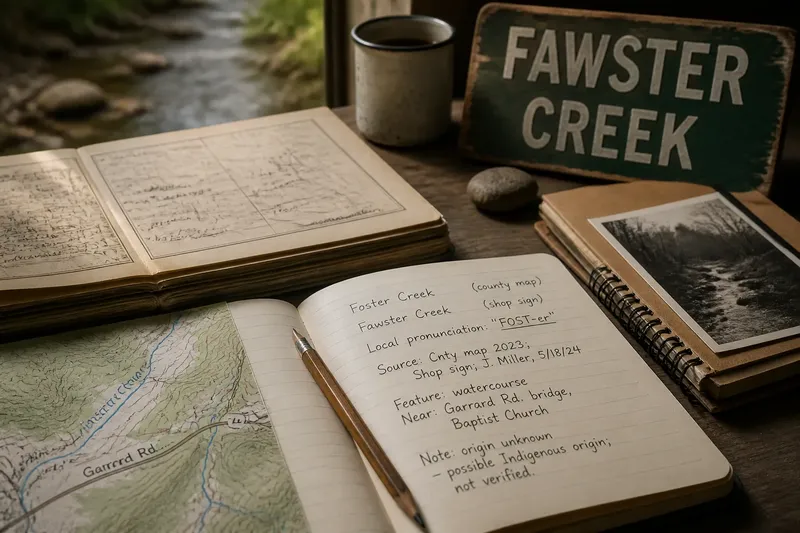
Imagine you are following a back road in eastern Tennessee and see a creek named on a county map, while a nearby shop sign gives the same name a different spelling. You write down both forms and ask a local historical society whether either appears in older records. The useful result is a focused question for further checking, not a claim that the shop sign preserves an older language.
Landscape words may describe more than a view
Names referring to a fork, ford, ridge, spring or clearing often point towards a feature people found useful or distinctive. The feature may still be visible, altered by development or difficult to locate without local knowledge. A name can outlast the landscape that first made it apt.
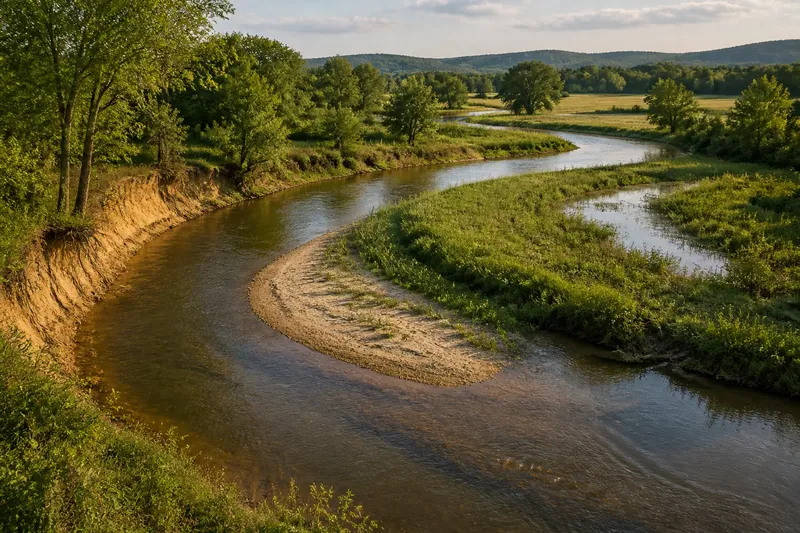
Southern place names also draw on features that are easy to overlook from a car: a low rise, a wet hollow, a bend in a small creek or a gap between wooded slopes. On a walking visit, compare the name with the terrain, but treat the match as a possible explanation rather than proof of origin.
There is no need to force a tidy landscape story. If a place called Spring Hill has no obvious spring nearby, the water source might have shifted, the name may refer to a feature outside the present settlement, or the explanation may be unrelated to water. The gap between name and scenery is itself a reason to keep looking.
Who used a name matters as much as what it means
A place can carry different names in different communities and at different times. One may appear in a county gazetteer, another in family speech, and another in records created by a government or landholder. These labels can overlap without being interchangeable.
That matters particularly for Indigenous names and names tied to Black Southern history. A later map may preserve a borrowed word while omitting the people who used it, or a community’s name may have been replaced in official records. Neither a surviving label nor its absence tells the whole story on its own.
When possible, look for who supplied a name and who used it: local histories, archival maps, community organisations and oral-history collections can offer different kinds of evidence. Treat a source’s limits as part of the record. A map records what its maker chose to include, not every name known locally.
What can a place name tell you, and what can it not?
Can a place name reveal the language it came from?
It can suggest a possible linguistic history, especially when a documented local form or specialist place-name source supports the connection. Spelling alone is weak evidence because sounds and letters shift as names pass between speakers.
Does a name prove that a settlement existed there?
Not by itself. The label might refer to a creek, farm, crossroads or broader district rather than a settled village, so pair it with maps, records and evidence of buildings or community life.
Why do maps give the same place different names?
Maps may reflect different dates, authorities, spelling choices or intended audiences. Compare the map’s legend and publication context, then record the variants instead of assuming one is simply an error.
Should a local pronunciation be written down?
Yes, if you can do so respectfully and accurately. Note who supplied it and the setting in which it is used; avoid presenting one person’s pronunciation as the voice of an entire community.
Build a small, honest record in the field
A compact note can preserve useful detail without pretending to settle an origin. Record the name as printed, the source and date of that source if available, the feature or settlement it labels, and any local pronunciation offered to you. Keep observations separate from explanations.
- Copy the spelling from the sign or map, including unusual punctuation.
- Write down whether the name labels a road, watercourse, neighbourhood or settlement.
- Note nearby features that might help locate the place, such as a crossroads, church or stream.
- Record variant spellings with their sources rather than blending them into one version.
- Mark an origin story as unverified unless you can identify supporting records.
- Ask before recording a private conversation, and follow the speaker’s wishes about attribution.
Not worth the effort: guessing an etymology from a familiar-looking word, then repeating it as fact. A plain note saying “possible connection; source not checked” is more useful than a confident story built on resemblance.
Follow the name beyond the sign
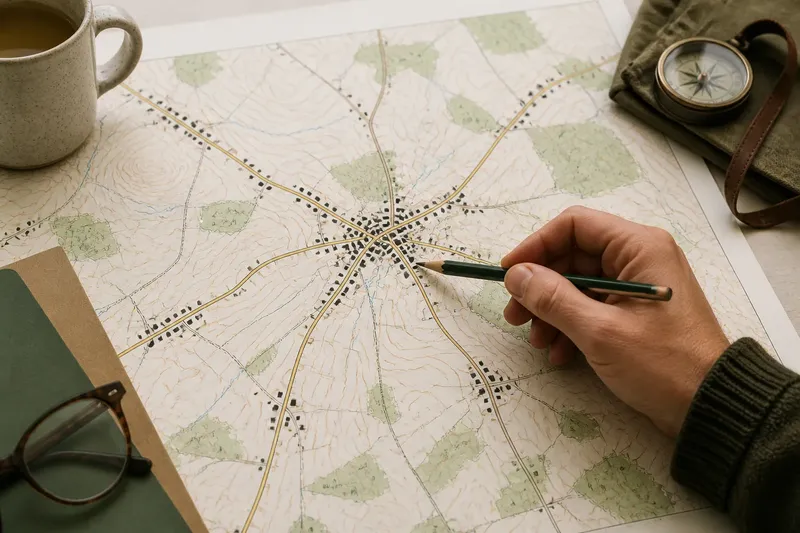
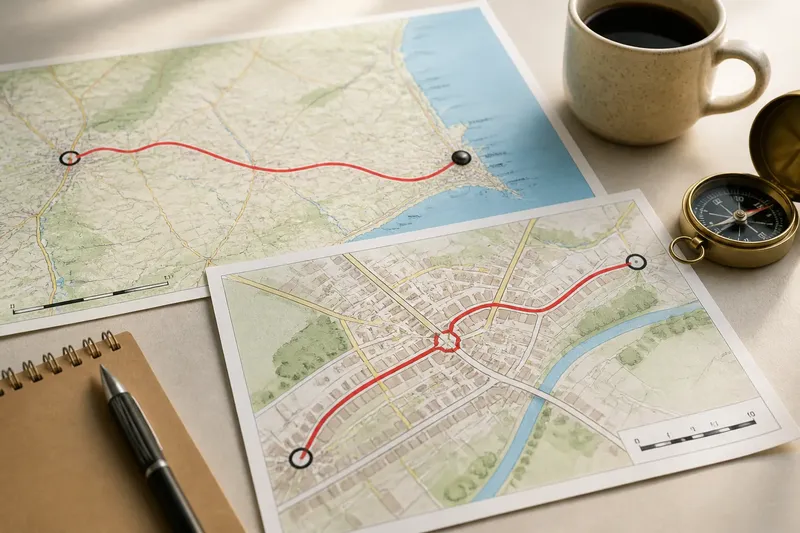
To investigate a name, compare sources that were made for different purposes. A road map may show a current label; an older county map may show a different spelling; a local history or archival catalogue may explain who used it. Each source answers a narrower question, so avoid asking one document to carry the whole account.
Say you find a Southern crossroads called Cedar Grove on a modern road map. You note that the map labels a crossroads rather than a town, then check an older county map and a local archive catalogue for variants. If the records identify a school or church under that name, you have more context for how the label functioned, but still not proof of the area’s earliest settlement.
Place names reward curiosity most when their limits stay visible. Read the label, listen for local forms and check what kind of place each source actually names. The many lives of a place name are not a puzzle with one word-shaped answer; they are a trail of clues whose value depends on keeping each one in view.